

The Immortal Silhouette: How the Concorde Became a Protected National Treasure
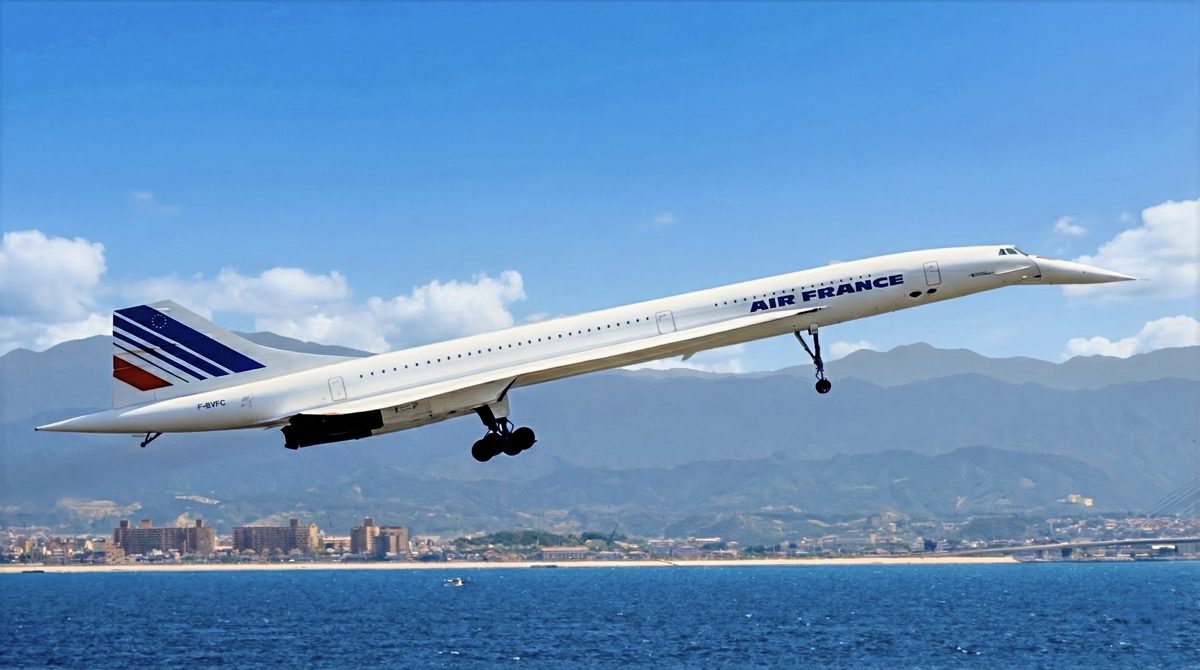
The history of aviation is often told through a lens of relentless progression, yet few machines have managed to transcend their mechanical purpose to become true cultural icons. Among them, the Concorde, often referred to as the great white bird, stands alone. More than two decades have passed since its final commercial descent, yet its needle-like nose and sweeping delta wings continue to haunt the collective imagination. In a significant move for global industrial heritage, the French government officially designated the Concorde prototype 001B, registered as F-WTSB, as a Monument Historique. This distinction is typically reserved for medieval cathedrals or the grand châteaux of the Loire Valley, yet it perfectly fits a machine that once reduced the vastness of the Atlantic to a mere three and a half hour commute.
As we navigate the landscape of early 2026, this classification is more than a nostalgic nod to a lost era of glamour. It represents a deliberate effort to preserve the sophisticated DNA of supersonic travel at a moment when the aerospace industry is on the cusp of a profound renaissance. This legal protection means that every component, from the Rolls-Royce Snecma Olympus 593 engines to the smallest dial in the cockpit, is now under the guardianship of the state, ensuring that the aircraft remains a primary source for future generations of engineers and historians.
| Component / Feature | Technical Description | Objective and Effect |
|---|---|---|
| Ultra-tapered Nose + Droop Nose | Variable structure: tilts down 12.5° during takeoff and landing for cockpit visibility; returns to a fluid needle shape during cruise. | Reconciles pilot visibility with the reduction of aerodynamic drag at supersonic speeds. |
| Delta Wing (Tailless) | A silhouette where the triangular wings appear molded as a single block with the entire fuselage. | Simplifies the structure while ensuring stable lift beyond Mach 2. |
| White Livery and Continuous Curved Surfaces | High solar reflectivity white coating to counteract kinetic heating (approx. 60°C). Perfectly smooth finish of rivets. | Thermal control, drag minimization, and enhancement of the iconic aesthetic. |
| 4 Rear-Concentrated Turbojets | Engine nacelles hermetically fixed at the junction between the fuselage and the wings. | Reduces resistance while aligning thrust toward the center of gravity for a clean, streamlined profile. |
| "Spearhead" Silhouette | Fluid aerodynamic line drawn in a single stroke from the cockpit to the vertical stabilizer. | Controls shockwave formation and creates a striking, futuristic visual identity. |
Engineering the Impossible: The Gothic Delta Wing and Thermal Mastery
The technical brilliance of the Concorde remains staggering even by contemporary standards. It was an aircraft that thrived in a regime of extremes. To maintain stability at twice the speed of sound, it employed a Gothic delta wing design. This specific shape provided exceptional lift at high speeds while remaining manageable during the delicate dance of landing. Unlike modern jets that rely heavily on computer automation, the Concorde was a masterpiece of analog complexity and mechanical intuition. One of its most striking features was the droop nose, which tilted down by 12.5 degrees during takeoff and landing to provide pilots with the necessary visibility, only to return to its sleek, needle-like form during supersonic cruise.
During its flight at Mach 2.02, which is approximately 2,179 kilometers per hour, the friction of the air against the fuselage was so intense that the aircraft would physically expand. The fuselage would lengthen by nearly 25 centimeters, a phenomenon that required engineers to design flexible joints within the cabin. This thermal reality dictated everything from its high-reflectivity white paint to the intricate fuel-transfer systems. Fuel was not merely burned; it was pumped between tanks as a liquid ballast to manage the center of gravity as the aircraft accelerated through the sound barrier.
Preservation at Aeroscopia: Safeguarding the Blueprints of the 1960s
The quiet halls of the Aeroscopia Museum near Toulouse have become a sanctuary for this legacy. A meticulous scientific restoration project is currently underway at the site as of January 2026. Engineers and historians are working in tandem to arrest the corrosion of the specialized aluminum alloys that once endured the searing kinetic heat of supersonic flight. This is not merely a cosmetic cleanup but a deep structural preservation. The project involves digitizing thousands of original analog blueprints and system schematics to prevent the loss of specialized knowledge that defined the 1960s aerospace boom.
Beyond the airframe itself, the museum is focusing on maintaining the integrity of the aircraft’s moving parts. Ensuring that the droop nose mechanism and the landing gear systems remain functional is vital for educational purposes. By keeping these mechanical systems in a state of arrested animation, France is ensuring that the technical mastery of the past remains accessible to the innovators of the 2030s.
L'Oiseau Blanc Revit : Boom et la NASA Redessinent le Futur du Transport Supersonique
The eventual retirement of the Concorde was not dictated by a lack of speed, but rather by a trio of seemingly insurmountable obstacles: excessive noise, high fuel consumption, and the staggering cost of maintenance. For decades, the sonic boom, that thunderous atmospheric signature of supersonic flight, effectively relegated high-speed travel to oceanic routes, preventing the aircraft from reaching its full commercial potential. However, as we move through January 2026, the narrative is shifting. The successors to the Concorde are no longer mere conceptual sketches; they are active engineering marvels undergoing rigorous testing.
Boom Supersonic: The Economic and Environmental Renaissance
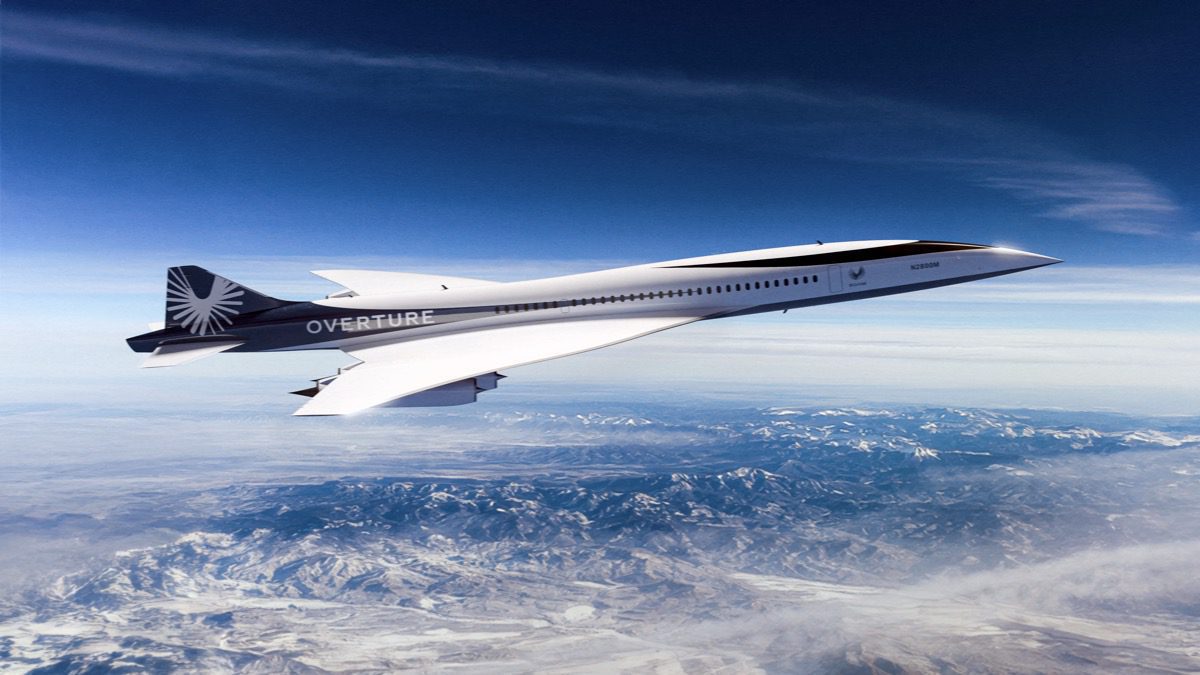
Leading the charge into this new era is Boom Supersonic with its ambitious Overture project. Unlike the Concorde, which was a product of Cold War-era prestige, the Overture is designed for a modern world that demands environmental accountability and economic viability.
Current Development Status (January 2026)
As of early 2026, Boom has successfully transitioned from its XB-1 demonstrator flights to the full-scale assembly of the Overture at its Superfactory in Greensboro, North Carolina. The primary focus this year is the testing of the Symphony engine, a bespoke propulsion system developed specifically for sustainable supersonic flight. Unlike the turbojets of the past, this engine operates without afterburners, significantly reducing both fuel consumption and noise during takeoff.
Operational Roadmap
The Overture is being engineered to run on 100 percent Sustainable Aviation Fuel (SAF), aiming for net-zero carbon emissions from its very first day of service. Its cruise speed is a calculated Mach 1.7, which is slightly slower than the Concorde but optimized for a far superior economic profile. Boom expects to begin flight testing for the first Overture production model by late 2026 or early 2027. If certification remains on track, commercial passengers can expect to board their first supersonic flights by 2029 or 2030. With over 130 orders and pre-orders from major carriers like United and American Airlines, the project represents a multi-billion euro investment in the future of global connectivity.
| Characteristic | Specifications |
|---|---|
| Cruise Speed | Mach 1.7 (approx. 2,100 km/h) |
| Range | 4,250 nautical miles (approx. 7,870 km) |
| Passenger Capacity | 64 to 80 passengers |
| Cruise Altitude | 60,000 feet (approx. 18,300 m) |
| Overall Length | 201 feet (approx. 61.3 m) |
| Wingspan | 106 feet (approx. 32.3 m) |
| Propulsion | 4 Symphony™ medium-bypass turbofans (no afterburner, 35,000 lbf thrust) |
| Fuel | 100% Sustainable Aviation Fuel (SAF) compatible |
| Environmental Performance | Net-zero carbon emission goal |
| Noise Standards | Compliant with ICAO Chapter 14 / FAA Stage 5 |
NASA’s X-59 QueSST: Breaking the Silence for Overland Flight
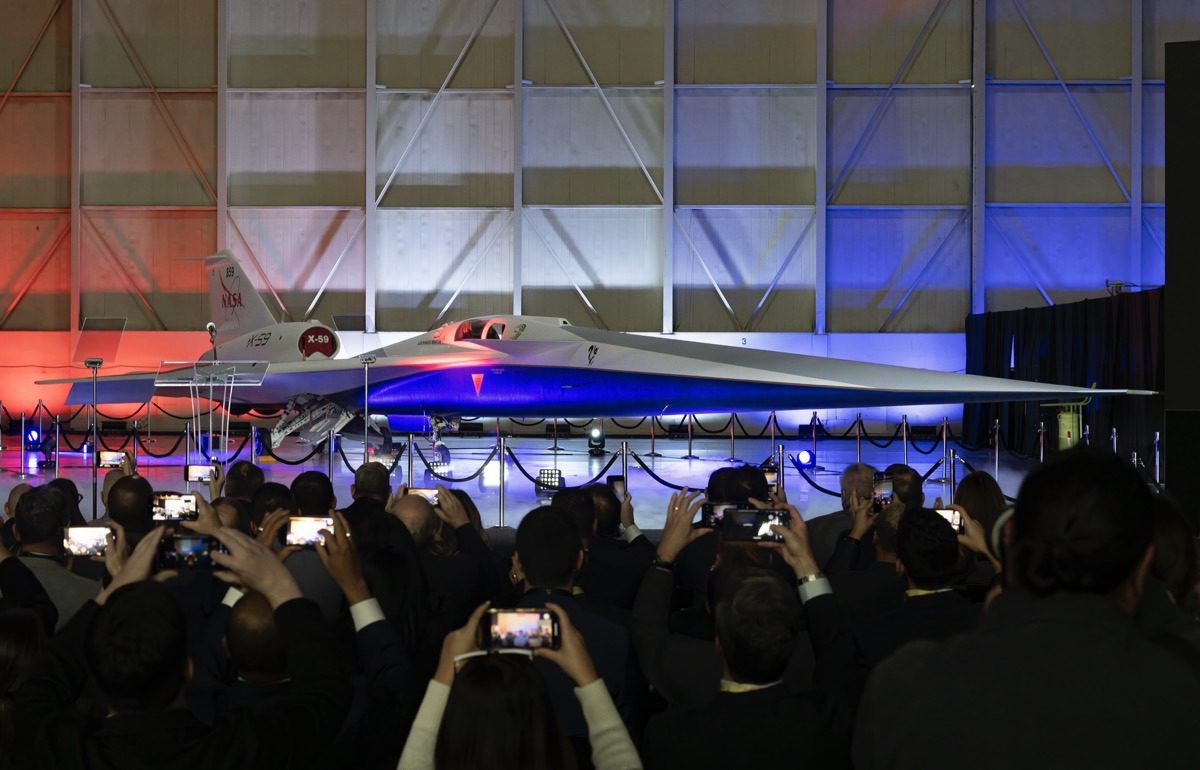
Simultaneously, NASA’s X-59 QueSST (Quiet SuperSonic Technology) project is tackling the “noise wall” that ultimately grounded the Concorde’s overland ambitions. The X-59 is a radical experimental craft designed to reshape the very physics of shockwaves.
Current Development Status (January 2026)
In 2026, the X-59 has moved into its most critical phase: Phase 3, or the Community Response Study. Following successful maiden flights and acoustic validation in 2025, NASA is now conducting overflight tests across selected U.S. cities. The goal is to prove that the window-shaking sonic boom of the past has been transformed into a muted “sonic thump” of approximately 75 EPNdB, which is comparable to the sound of a car door closing.
Strategic Goals and Regulation
A unique feature of the X-59 is the External Vision System (XVS). Because the aircraft’s long, needle-like nose prevents a traditional forward-facing window, pilots use a 4K ultra-high-resolution monitor to view the sky ahead. The data gathered from these 2026 community tests will be shared with international regulators at the FAA and ICAO. This evidence is expected to lead to a paradigmatic shift in aviation law by 2028, potentially lifting the decades-old bans on supersonic flight over land. While the X-59 itself is a research tool and not a commercial jet, its success is the key that will unlock overland routes for the next generation of supersonic passenger planes.
| Characteristic | Specifications |
|---|---|
| Overall Length | approx. 30.4 meters (99.7 feet) |
| Wingspan | approx. 9.0 meters (29.5 feet) |
| Cruise Speed | Mach 1.4 (approx. 1,510 km/h) |
| Maximum Speed | Mach 1.5 (approx. 1,593 km/h) |
| Cruise Altitude | approx. 16,800 meters (55,000 feet) |
| Propulsion | General Electric F414-GE-100 (22,000 lbf thrust) |
| Acoustic Signature | approx. 75 EPNdB (equivalent to the sound of a car door closing) |
| Crew | 1 Pilot |
| Cockpit Visibility | No forward-facing window; utilizes eXternal Vision System (XVS) via 4K cameras and monitors |
| First Flight Milestone | Accomplished / Scheduled 2025 |
| Project | Primary Focus | Target Service Date | Operational Goal |
|---|---|---|---|
| Boom Overture | Commercial Profitability | 2029–2030 | 100% SAF & Net-Zero Carbon |
| NASA X-59 | Regulatory Change | 2028 (Policy Change) | Eliminate the Sonic Boom |
Hypersonic Ambitions: China’s Yunxing and the Mach 4 Frontier
The geopolitical race for speed does not end with supersonic flight. In China, the Yunxing project by Space Transportation is aiming for the hypersonic frontier, targeting speeds of Mach 4. Having successfully validated sub-scale prototypes in late 2024, the project is working toward a 2030 goal of connecting Beijing to New York in just two hours. While the Concorde relied on turbojets with afterburners, these new contenders utilize advanced ramjets and computational fluid dynamics to achieve efficiency that was previously unthinkable. The use of carbon-fiber composites and advanced ceramic coatings allows these next-generation aircraft to manage thermal loads that would have melted the aluminum skin of the Concorde.
The sanctification of the Concorde as a national monument is not a funeral for speed. It is an acknowledgement that the quest for the horizon is a fundamental human endeavor. The white bird taught us that we could break the sound barrier. Its descendants must now prove that we can do so with silence and sobriety. As we look at the restored frames at Aeroscopia, we are not just looking at the past. We are looking at a roadmap for a future where the world remains small but our responsibility to it remains large. If the current trajectory holds, the late 2020s will see these elegant, needle-nosed silhouettes return to the skies, marking a world that refuses to abandon the dream of the infinite horizon.
Plan Your Visit to Aeroscopia
To truly appreciate the scale and intricacy of the Concorde, a visit to the Aeroscopia Museum is essential for any aviation enthusiast or historian.
Location: 1 Allée André Turcat, 31700 Blagnac, France
Admission: EUR 15 [USD 16.35] for adults; EUR 12 [USD 13.08] for concessions.
Opening Hours: Daily from 9:30 AM to 6:00 PM.
Special Note: Guided tours focusing on the Monument Historique restoration are available by prior reservation.
Editorial Disclosure & Visual Credits
Sources and Editorial Standards This article is a curated synthesis of reporting and analysis, drawing upon primary coverage from leading French dailies, including Le Monde, Le Figaro, and Le Parisien, as well as specialized technical insights from publications such as 01Net and Usine Nouvelle. Our editorial mission is to provide comprehensive context and structural depth, transforming fragmented news reports into a cohesive narrative that satisfies both intellectual curiosity and the need for factual accuracy as of January 2026.
Visual Documentation and Copyright The imagery presented in this post consists of original photography captured on-site by the author. These visuals have been meticulously refined using advanced AI-assisted editing tools to enhance clarity and aesthetic quality while maintaining the integrity of the subject matter. All visual content is produced in strict accordance with international copyright laws and is the exclusive property of the author, ensuring a unique and rights-compliant experience for our readers.