The Invisible Spine of Paris: Decoding the Geopolitics and Genius of the Arago Line
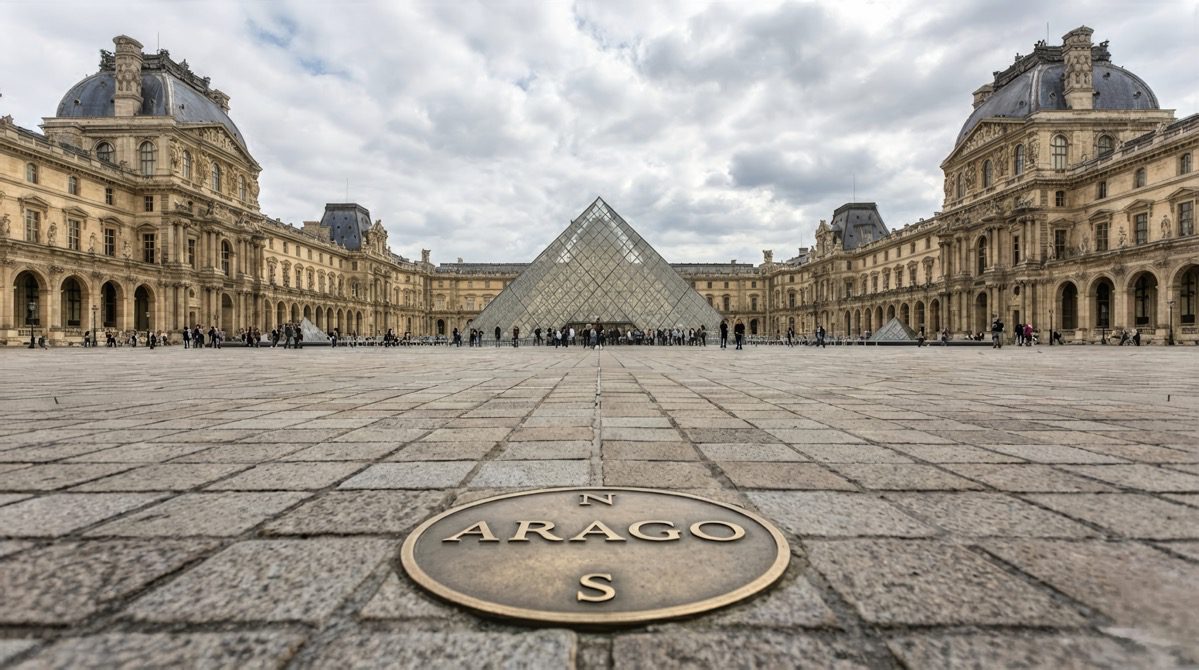
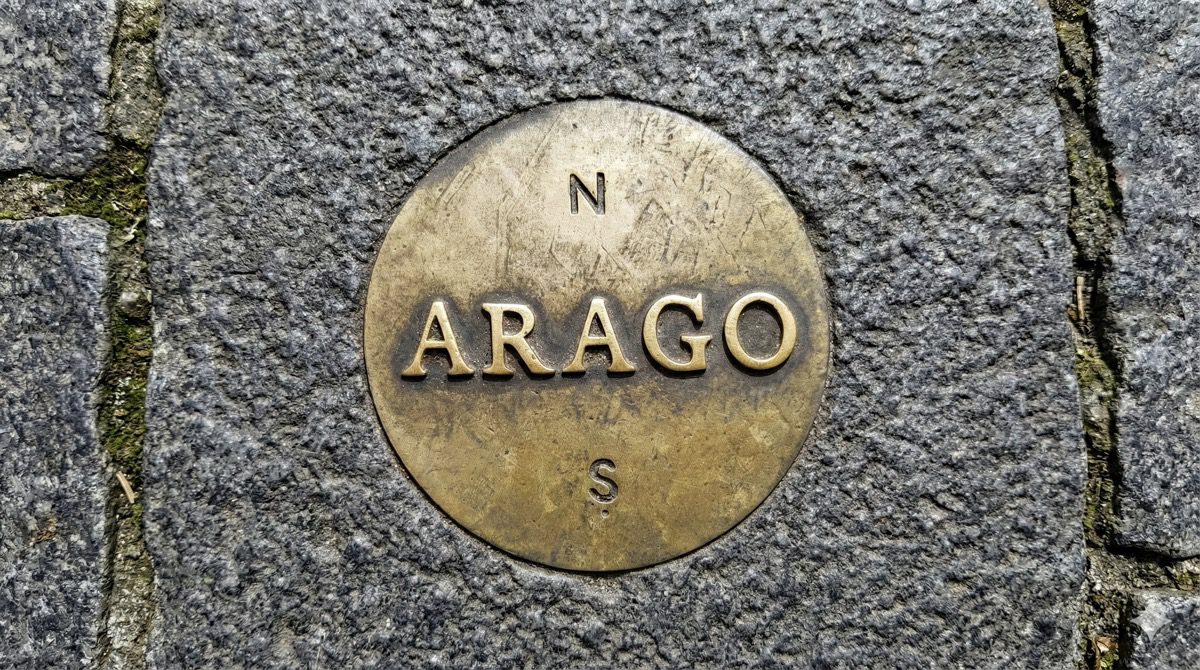
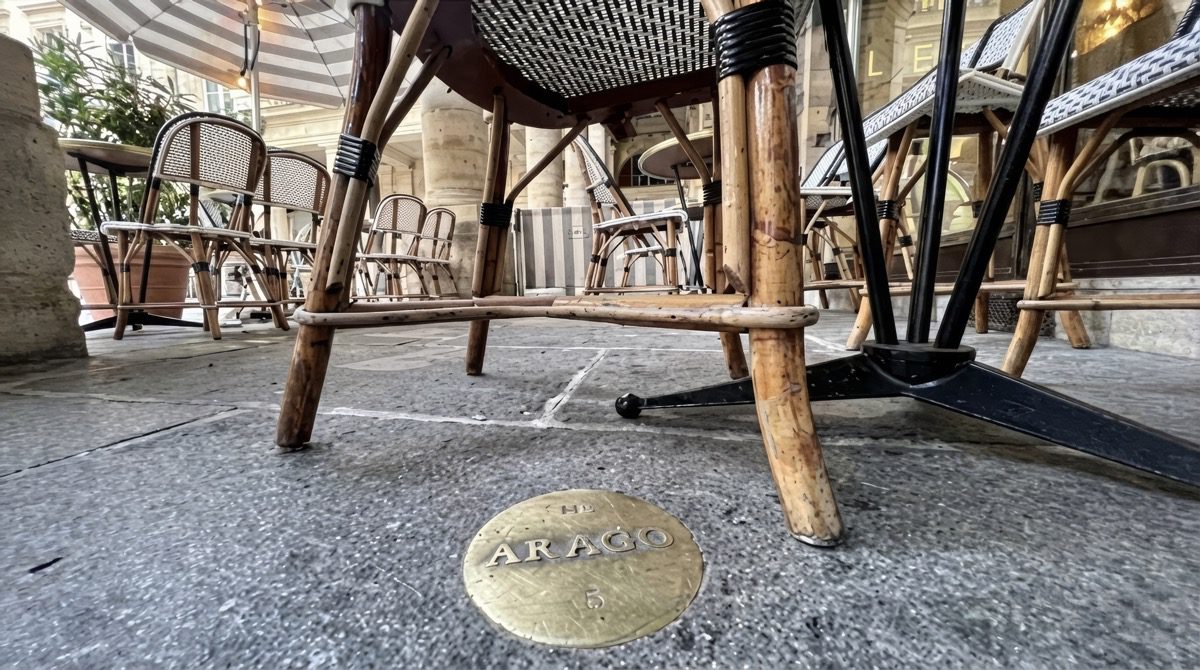
In the shadow of the Louvre’s Glass Pyramid, where the light of the Parisian sky dances across I.M. Pei’s steel and crystal geometry, the typical visitor is often too preoccupied with the treasures within the museum to notice the treasure beneath their feet. Scattered across the limestone paving of the Cour Napoléon are modest bronze disks, just twelve centimeters in diameter, inscribed with a name – ARAGO – and the cardinal markers N and S. To the uninitiated, they appear as mere urban flourishes or perhaps the residue of some forgotten civic project. In reality, they are the physical manifestations of a “lost” world order, the skeletal remains of the Paris Meridian, an invisible line of longitude that for two centuries fought a silent, scientific war against London’s Greenwich for the right to be the center of the Earth.
The Geopolitical Duel for the "Degree Zero"
The history of this line is not merely a tale of maps and stars; it is a narrative of raw power and national sovereignty. The story begins on the summer solstice of 1667, under the vision of Jean-Baptiste Colbert and the patronage of Louis XIV. The “Sun King” understood that to dominate the world, one had to define it. By founding the Paris Observatory, France sought to establish its own “Prime Meridian”—a reference line from which all time and distance would be measured. In an era where maritime navigation was the key to global empire, the nation that controlled the prime meridian effectively controlled the maps of the world. To know your longitude was to know your place in the universe, and for the French Enlightenment, that place began in the heart of Paris.
This rivalry with Great Britain reached its fever pitch during the International Meridian Conference of 1884 in Washington, D.C. Representatives from twenty-five nations gathered to select a single, universal prime meridian to synchronize global shipping and telegraphy. It was a diplomatic chess match of the highest order. The British argued for Greenwich, citing that the majority of the world’s shipping charts already relied on their standards. The French countered with a more abstract, “neutral” argument, proposing a meridian that did not belong to any great power, such as one passing through the Azores or the Bering Strait. When Greenwich was ultimately chosen, the French delegation was so incensed that they refused to officially adopt the new standard for nearly three decades. It was only in 1911 that France finally synchronized its clocks with the rest of the world, though even then, they stubbornly referred to it not as “Greenwich Mean Time,” but as “Paris Observatory time, retarded by nine minutes and twenty-one seconds.”

The Birth of the Meter: Science in the Shadow of the Guillotine
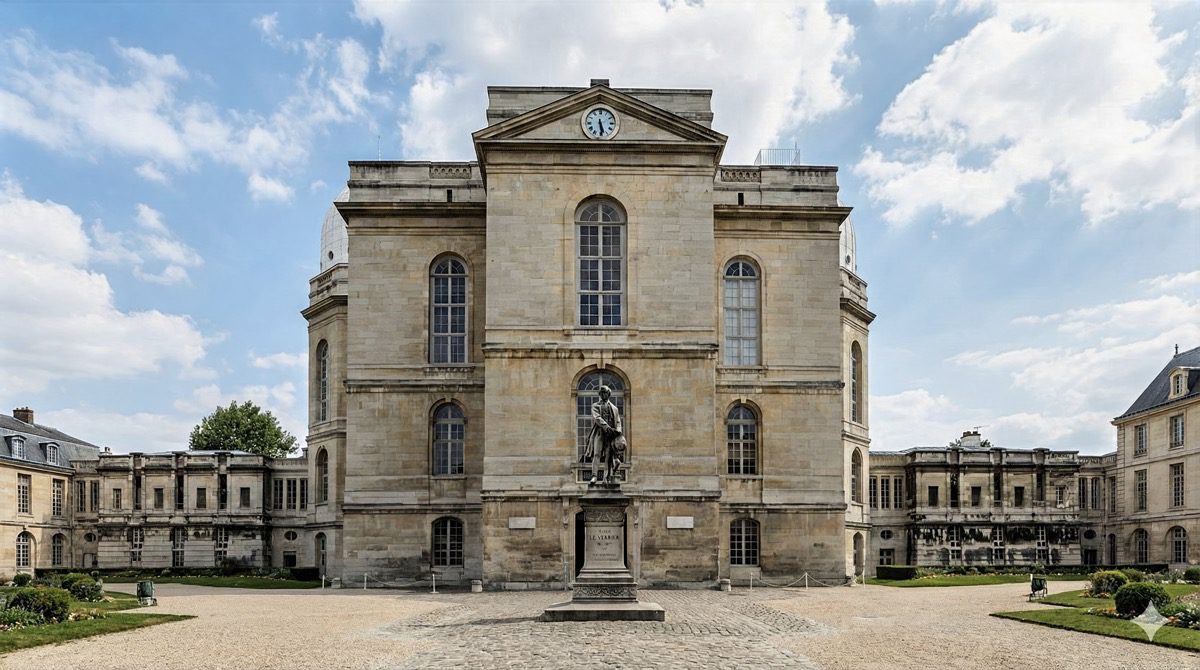
While the Paris Meridian lost the battle of time, it won the battle of measurement, giving birth to the Metric System. During the fervor of the French Revolution, the National Assembly sought a universal standard that was not based on the whims of a king’s foot or an artisan’s thumb, but on the immutable dimensions of the Earth itself. They defined the Meter as exactly one ten-millionth of the distance from the North Pole to the Equator, measured precisely along the Paris Meridian. This led to one of the most daring scientific expeditions in history. Between 1792 and 1798, astronomers Pierre Méchain and Jean-Baptiste Delambre set out to measure the arc of the meridian from Dunkirk to Barcelona.
Their journey was nothing short of heroic. As they traversed a landscape gripped by the Terror, they were frequently arrested as spies, their surveying instruments mistaken for tools of sorcery or royalist espionage. Yet, their calculations provided the first empirical proof that the Earth was not a perfect sphere, but an oblate spheroid—slightly flattened at the poles due to its rotation. This was a revolutionary realization for geodesy, the science of measuring the Earth’s shape and gravity. The meter was not just a length; it was a fragment of the planet’s circumference, a “measure for all people, for all time,” born from the very soil of the meridian.
François Arago: The Polymath of the Republic
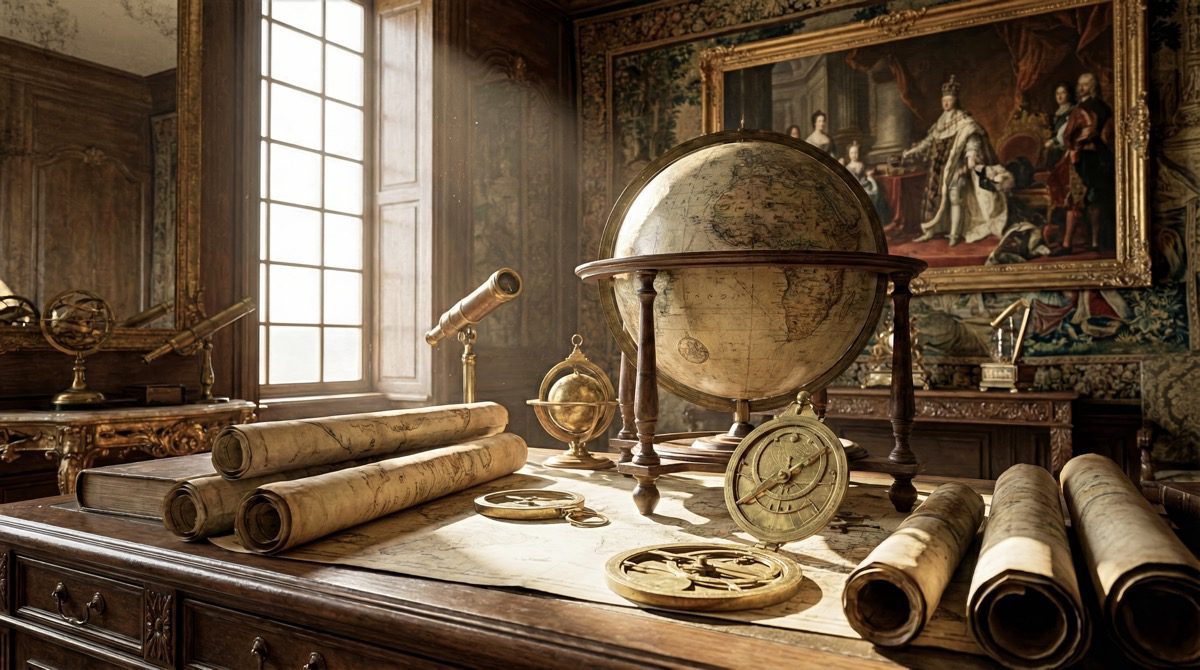
The name etched into the bronze medallions honors François Arago, a man whose life reads like a synthesis of an adventure novel and a scientific treatise. As a young scientist in 1806, Arago was sent to Spain to complete the meridian measurements. When the Napoleonic Wars broke out, he was suspected of being a French spy. His subsequent escape involved a fortress imprisonment, a flight across the Mediterranean, and a harrowing capture by Algerian pirates. He eventually returned to Paris with his precious data hidden beneath his clothes, having survived what many would have considered certain death.
However, Arago was far more than a surveyor. He was a polymath who made fundamental contributions to the wave theory of light and helped predict the existence of the planet Neptune. Perhaps more importantly, he was a fierce advocate for human rights. In 1848, as a leader in the provisional government, Arago signed the decree that abolished slavery in all French colonies. For Arago, the meridian was not just a technical achievement; it was a line of progress. He believed that scientific truth and social justice were inseparable, making the Arago Line a monument to the Enlightenment’s highest ideals.
The Observatory: An Architectural Instrument of Time
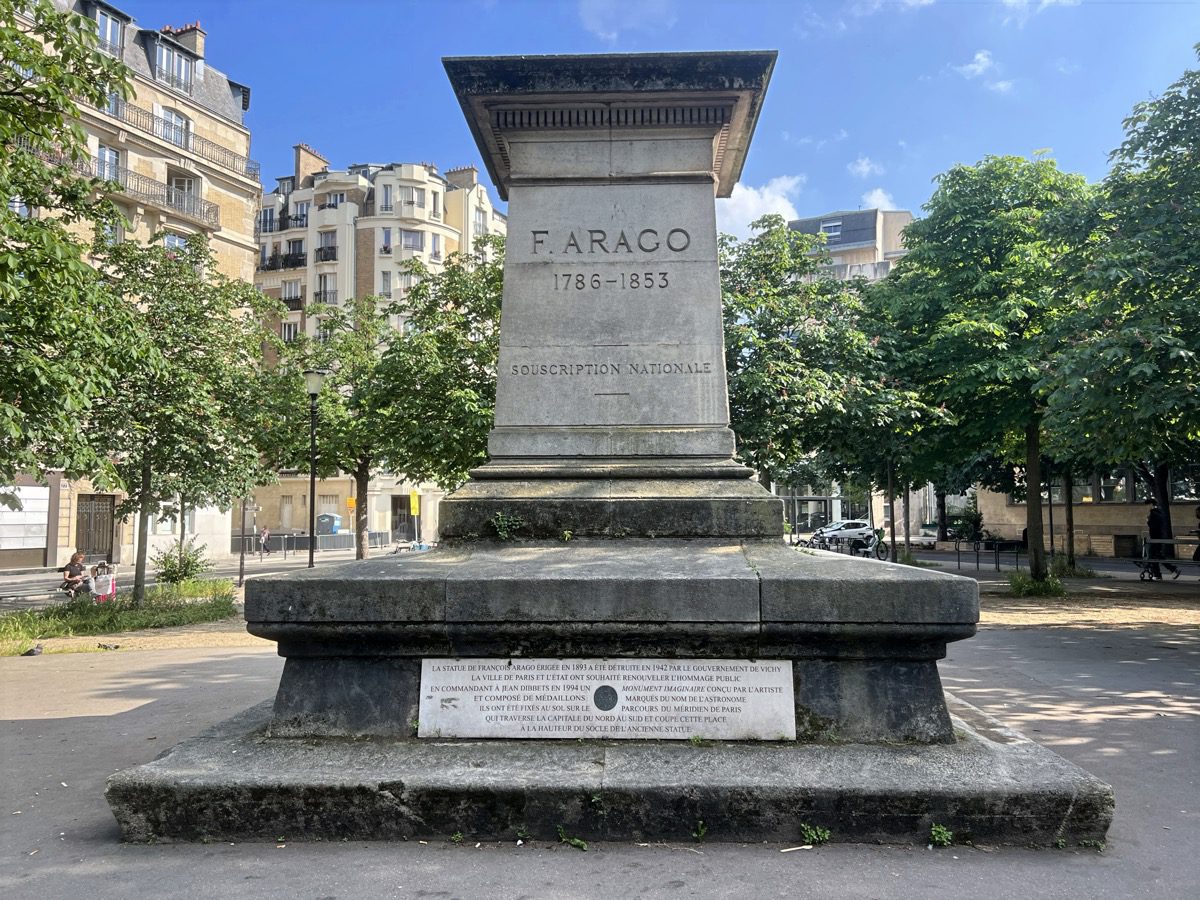
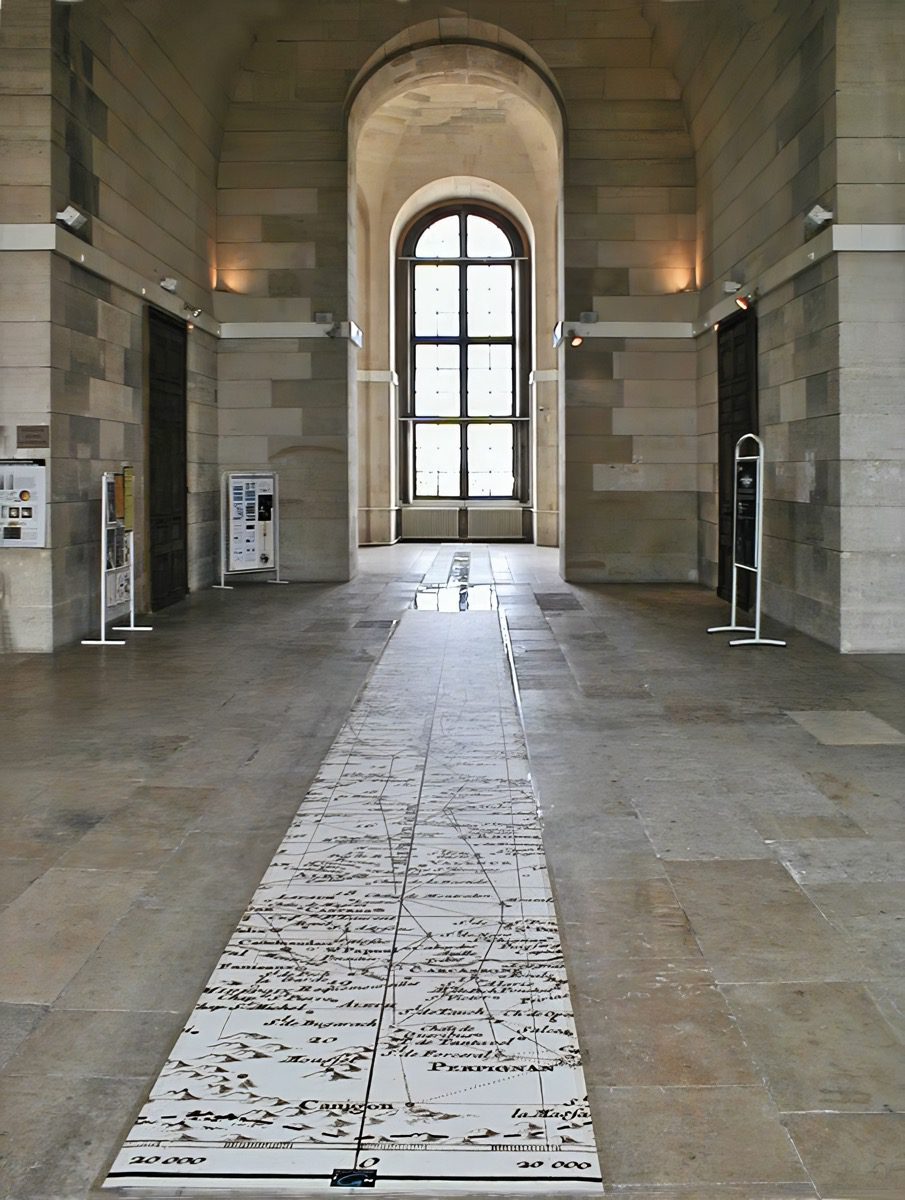
To understand the meridian’s physical reality, one must visit the Paris Observatory in the 14th Arrondissement. Designed by Claude Perrault, the building is an architectural anomaly—it is not merely a house for telescopes, but a giant scientific instrument in its own right. Its four facades are aligned precisely with the cardinal points, and the building’s central axis coincides exactly with the meridian. Inside, on the second floor, lies the Salle Cassini, where a brass line is embedded into the white marble floor.
In this room, the abstract concept of time becomes tangible. On clear days, a ray of sunlight passes through a small aperture – a gnomon – in the southern wall, projecting an ellipse of light onto the floor. At the precise moment this light crosses the brass line, it is “Solar Noon” in Paris. In 2026, visitors can still witness this cosmic clockwork. Access to this sanctuary is available by reservation for a fee of 15.30 EUR, offering a rare moment of stillness where the movement of the stars meets the geography of the city.

The Modern Legacy: A City as a Palimpsest
The 135 medallions we see today were not laid by Arago himself, but by the Dutch conceptual artist Jan Dibbets in 1994. By scattering these bronze markers across a 9.2-kilometer stretch of the city, Dibbets transformed a rigid scientific line into a poetic “imaginary monument.” The trail invites the curious to treat Paris as a palimpsest, a surface where layers of royal ambition, revolutionary zeal, and modern art are superimposed.
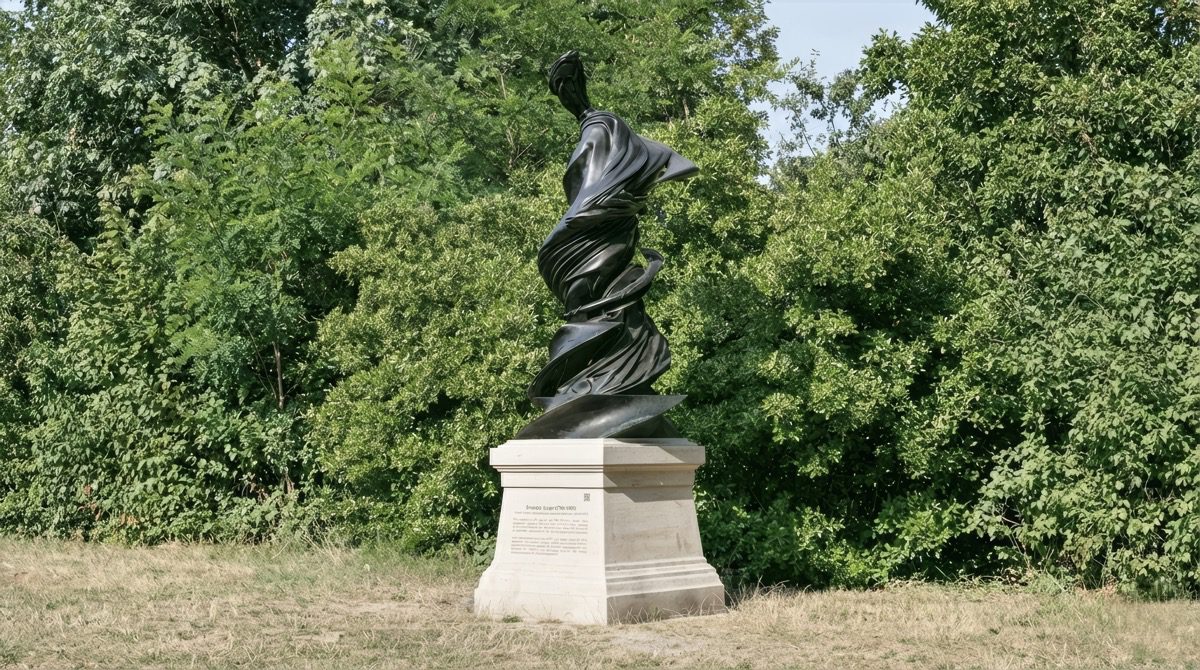
The journey along the line is one of resilience and memory. At the intersection of Boulevard Arago and Avenue de l’Observatoire, a stone pedestal stands conspicuously empty. It once held a bronze statue of Arago, which was melted down by the Vichy regime in 1942 to provide metal for the Nazi war machine. For decades, the void remained—a silent scar of the Occupation. It was only in 2017 that a new tribute was added: a bronze spiral by Wim Delvoye, whose form suggests both the double helix of life and the celestial mechanics Arago loved so dearly.
Navigating the Axis: A Practical Guide for 2026
For those wishing to undertake the “Great Arago Traverse,” the journey begins at the Parc Montsouris in the south, home to the Mire du Sud, a stone marker used to calibrate the Observatory’s instruments. Moving northward, the path cuts through the Jardin du Luxembourg, where medallions are tucked into the gravel near the Senate. The highlight for many remains the Louvre, where the medallions encircle the pyramid, emphasizing that the museum itself is built upon this scientific spine.
Practical Information for your 2026 Exploration:
- Total Distance: Approximately 9.2 km (5.7 miles).
Louvre Entry: To see the medallions within the palace courtyards, expect a museum entry fee of 22.00 EUR.
The “Midi Vrai” Experience: If visiting the Observatory, aim for a clear day to see the solar ellipse in the Salle Cassini.
The Paris Meridian serves as a profound reminder that our modern world—governed by GPS and atomic clocks—was built on the courage of individuals who dared to measure the unknown. The next time you walk through the Louvre, do not merely look up at the masterpieces on the walls. Look down. Beneath your feet is the ghost of a world that almost was, a bronze-coded map to the stars and the very measure of our planet.
Annex: The Arago Photo Walk Guide (2026 Edition)
Capture the "Invisible Spine" of Paris—a photographic journey through history, science, and the art of urban recovery.
Tracing the 135 Arago medallions installed by Jan Dibbets is more than a simple stroll; it is a photographic exploration of the intersections between light, shadow, and human ambition. In the Paris of 2026, where historical preservation meets digital innovation, we have curated five essential “photo stops” that offer the most compelling visual narratives of the meridian.
Parc Montsouris: The Sentinel of the South
Your journey begins in the 14th Arrondissement at the lush Parc Montsouris. Here stands the Mire du Sud, a four-meter-high stone obelisk once used to calibrate the Observatory’s instruments.
The Shot: Arrive in the early morning when the soft, low-angled light filters through the trees. Capture the obelisk from a low perspective to emphasize its scale against the sky. This framing evokes the monumental task 18th-century scientists faced when attempting to measure the world.
Historical Note: This is the southern gateway where the meridian enters the city proper, a site of immense geodesic significance.
Avenue de l’Observatoire: The Dialogue of Memory
Just south of the Jardin du Luxembourg lies a poignant juxtaposition: the empty stone pedestal where Arago’s statue once stood before it was melted down in 1942, and the 2017 bronze spiral by Wim Delvoye.
The Shot: Use a wide-angle lens to capture both the haunting void of the pedestal and the glistening, modern spiral in a single frame. At sunset, the bronze of Delvoye’s work glows with an orange hue, creating a powerful metaphor for Paris’s ability to remember and reinvent itself.
Pro Tip: A visit to the nearby Paris Observatory remains a must (15.34 EUR), though reservations are strictly required two weeks in advance.
Jardin du Luxembourg: The Geometric Silence
The meridian cuts through the gravel paths of one of the world’s most beautiful gardens. Here, the medallions are often partially obscured by the very earth they measure.
The Shot: Employ a shallow depth of field. Focus sharply on the “ARAGO” engraving on a medallion in the foreground, letting the background blur into the soft textures of the Luxembourg Palace or the Senate dome. This contrast between the small bronze disk and the sprawling palace illustrates the hidden foundations of Parisian power.
The Louvre (Cour Napoléon): The Mirror of Time
This is the most iconic stop on the trail. Several medallions encircle the Glass Pyramid, marking the museum as a point on a cosmic scale.
The Shot: For the ultimate dramatic image, visit after a light rain or during the blue hour. Position your camera near the ground to capture the reflection of the illuminated Pyramid in the wet paving stones, with a bronze medallion shining in the immediate foreground. It is a collision of 17th-century science and 20th-century glass architecture.
Note: While the Cour Napoléon is free to access, entering the inner palace courtyards to see further markers requires a museum ticket (22.00 EUR).
Palais-Royal to Rue de Richelieu: The Framed History
As you head north, the medallions lead you through the arcades of the Palais-Royal and onto the urban bustle of Rue de Richelieu.
The Shot: Use the classical arches of the Palais-Royal to “frame” a medallion on the sidewalk outside. This “framing effect” captures how the meridian is woven into the everyday fabric of Paris, a silent witness to the city’s constant motion.
Practical Explorer’s Notes (2026)
Essential Tech: Ensure you have the updated “Arago Meridian AR” app. Its LiDAR-enhanced overlays help you locate worn medallions that have been nearly erased by a century of footsteps.
Distance & Duration: The full 9.2 km (5.7 miles) route typically takes 4 to 5 hours if you are pausing for photography.
Estimated Budget (2026):
- Louvre Museum: €22.00
- Paris Observatory (Guided Tour): €15.00
- Total: €37.00 (Note: The Arago walk itself is a free open-air experience accessible to all.)
By the end of this walk, your lens will have transformed an invisible line into a tangible story—reminding us that the “City of Light” is also a city of deep, mathematical shadows.
Editorial Standards and Transparency
Sources & Editorial Policy The content of this article is researched and synthesized from leading French news outlets, including national dailies such as Le Monde, Le Figaro, and Le Parisien, as well as specialized industry media like 01Net and Usine Nouvelle. Our editorial mission is to curate complex reporting, providing additional historical context and background analysis to offer our readers a comprehensive understanding of the topic.
Primary Reference:
Le Monde – Issues dated Thursday, December 25, and Friday, December 26, 2025.
Visual Content & Copyright Compliance The images featured in this article are derived from the following sources:
Original photography captured by the author and enhanced using AI-driven editing tools.
Publicly available media sourced from Wikimedia Commons.
Unique visual assets created specifically for this publication using Generative AI.
We are committed to intellectual property integrity; all visual materials are used in accordance with fair use and copyright regulations to ensure that no third-party rights are infringed.